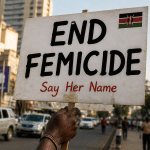
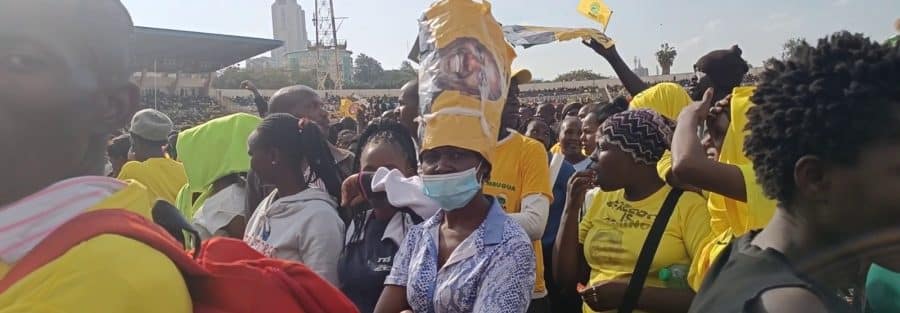
Amina, not her real name, has learned to walk with people whose only job is to keep her alive. She is one of the countless women across Kenya who experience electoral GBV in Kenya, a term that captures what the political system has long refused to name. As a political mobilizer, she has spent campaign seasons in the trenches that most Kenyans never see, where votes are actually won.
It is grueling, unglamorous, essential work, and it has made her a target. Groping. Harassment. Intimidation. Physical assault. She has experienced all of it, and she is far from alone. In her account, the young men who form the foot soldiers of campaign “goon” networks make up the largest share of perpetrators against women like her.
What stays with her most is not the violence itself, but what happens after. When attacks break out on the campaign trail, the politicians these women mobilize for are often the first to be evacuated, whisked away by their own security details, leaving the women who built their support base stranded, exposed, and left to find safety on their own. The same campaign that depends entirely on women’s labor offers them none of its protection.
The kingmakers nobody protects
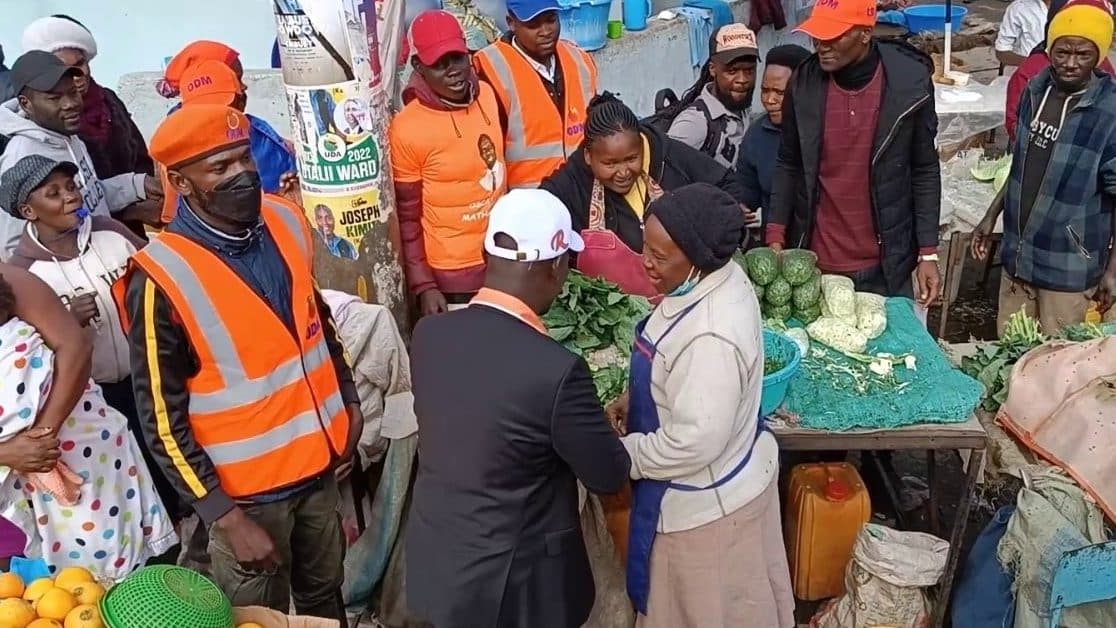
Kenyan politics runs on women’s organizing power. Chamas, church guilds, market associations; these are the structures through which votes are actually mobilized, long before a candidate’s name appears on a ballot. Women have carried this weight since before independence, from the Mau Mau resistance through the human rights and student movements that shaped the country. Yet the relationship between these women and the politicians they elevate remains stubbornly transactional: indispensable during the campaign, invisible once office is secured.
This is not incidental. It is the predictable output of a political culture that treats leadership as a male preserve, one where women who do claim space face ridicule, character assassination, and exclusion from the informal networks of patronage that actually broker political power.
The numbers bear out what Amina describes. A Nordic Africa Institute study of women county-level candidates across Nairobi, Nakuru, and Uasin Gishu counties found that 63 percent had experienced some form of physical attack during their campaigns – being shoved or restrained by goons, pursued on foot or by motorbike, boxed into cars and rocked by mobs. A third reported sexual violence: groping, coercion, unwanted advances, and in several cases, solicitation for sex in exchange for a place on the ballot. And an overwhelming 93 percent reported psychological violence, including threats, shaming, online harassment, and disinformation designed to make the cost of running for office unbearable. Younger women candidates, the study found, were disproportionately targeted with sexual coercion and online abuse.
These are not isolated cases of bad actors. They are a system functioning exactly as designed: violence deployed deliberately to remind women that political power remains, fundamentally, men’s to give or withhold.
A Violence with No Name
Here is what makes this violence so difficult to confront: there is no dedicated mechanism for reporting it. When women like Amina do report electoral GBV in Kenya, the response is too often the question that ends the conversation before it starts – what took you to the campaign trail in the first place? The blame shifts to the victim. The case quietly dies.
Fear of retaliation from political goons keeps many women silent before they ever reach a police station. For those who do report, confidentiality is not guaranteed; some officers are themselves compromised, embedded in the same patronage networks that benefit from women staying quiet. FIDA Kenya’s monitoring of the 2022 general election documented this same pattern nationally: physical and verbal abuse, sexual violence, defamation, and a recurring questioning of women’s competence to hold office, against a backdrop of accountability mechanisms that exist on paper but rarely deliver consequences. Where the state fails to prosecute, impunity does not stay neutral; it actively signals that violence against women in politics is an acceptable cost of doing business.
A violence that cannot be named is a violence that cannot be addressed. Right now, electoral GBV in Kenya has no agreed-upon name in law enforcement practice, no standard reporting pathway, and no consistent data trail. That absence is not an accident of bureaucracy. It is a structural choice that protects perpetrators by default.
The True Cost of Electoral GBV in Kenya
The cost of Electoral GBV in Kenya is not confined to the women who survive it. It is paid by every woman watching from the sidelines, calculating whether political life is worth the risk and, increasingly, deciding it is not. Some of the Nordic Africa Institute’s interviewees described retreating to “safe zones” for campaigning, hiring private security they could barely afford, relocating their families, or withdrawing from races altogether. This is the quieter, harder-to-measure toll: not just the women pushed out, but the women who never run at all because they have watched what running costs.
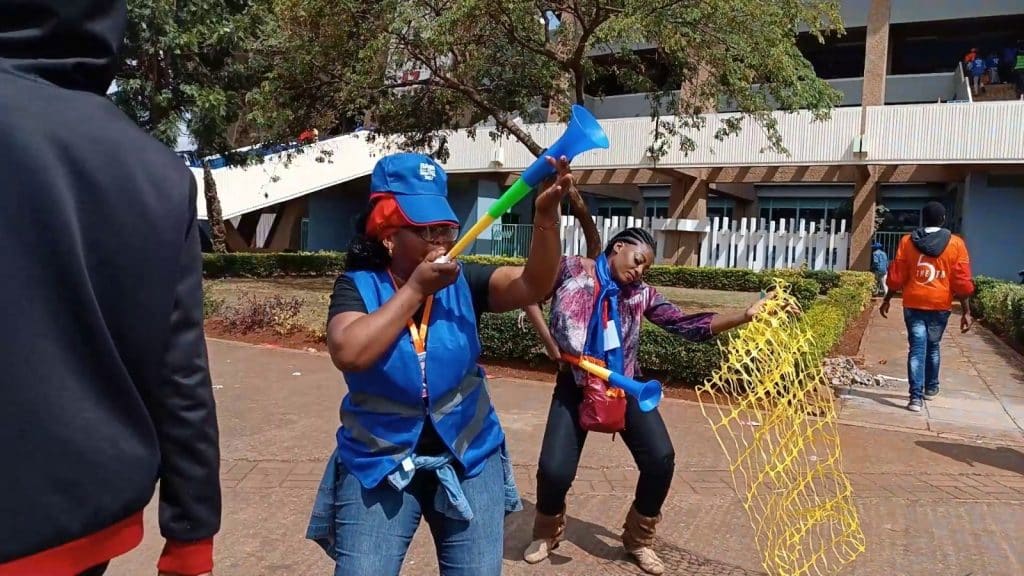
As Kenya moves toward the 2027 election cycle, the use of goon networks by political actors is intensifying. The question this raises is: when these networks are unleashed on the public, who actually absorbs the impact? Increasingly, the answer is women – the mobilizers, the aspirants, the candidates who do the work of democracy on the ground and are offered none of its protection in return.
Where Badili Africa stands
Through our Docufilm, The Women Kingmakers, and our recent publication, A Political Ecosystem Designed to Exclude Young Women in Kenya, we have documented what Electoral GBV in Kenya looks like on the ground and what it produces structurally: a political ecosystem that does not fail women by accident but is designed to exclude them. Badili Africa is working to do what the system has so far failed to do: name this violence clearly, document it rigorously, and insist that it be treated as a political accountability issue rather than an unfortunate side effect of “rough” politics. That means pushing for a dedicated reporting mechanism for electoral GBV in Kenya, one with real confidentiality protections and real consequences for perpetrators, including the politicians who deploy goon networks and then disappear when the violence they ordered turns dangerous.
Civic education has a role here too, not just teaching women to vote, but equipping them to recognize and name gendered political violence when they encounter it, and to know that reporting electoral GBV in Kenya is not an overreaction but a right. Changing the narrative also means reframing women’s political labor itself: not as a resource to be extracted on behalf of male candidates, but as the foundation of a political class in which women elect women on their own terms, with their own safety guaranteed.
Amina still walks the campaign trail with people whose job is to protect her. The goal of this work is a future in which she no longer needs them, where the system itself is built to keep her safe because, without women like her, there is no campaign to win in the first place.