
Most of us have grown up seeing civic conversations happen in conference halls and workshops.
But here is what we have been learning at Badili Africa:
Some of the most honest, powerful conversations about rights, leadership, and accountability are happening in much simpler places.
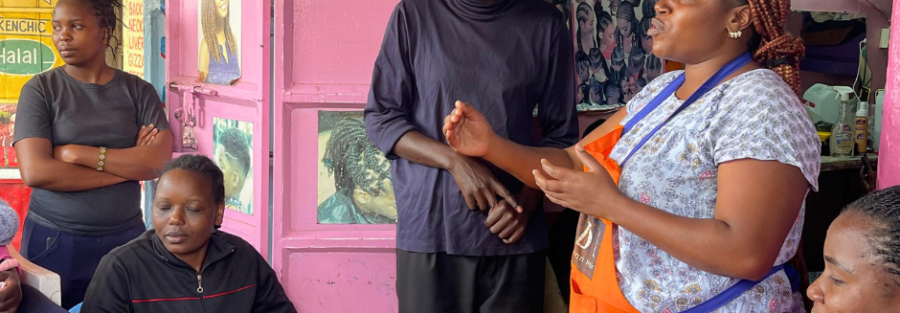
They are happening while hair is being braided in neighborhood salons, while someone else is getting their makeup done.
In the Chamas/Stokvels (merry-go-round meetings) that women hold in communities and homes.
On barbershop chairs during an ordinary haircut, or while you are in a taxi to work, or rushing for a meeting.
Instead of asking communities to come to us, we decided to go where people already gather—where trust already exists. Across Chamas/Stokvels, salons, communities, learning institutions, and digital platforms, we ensure no one is left behind.
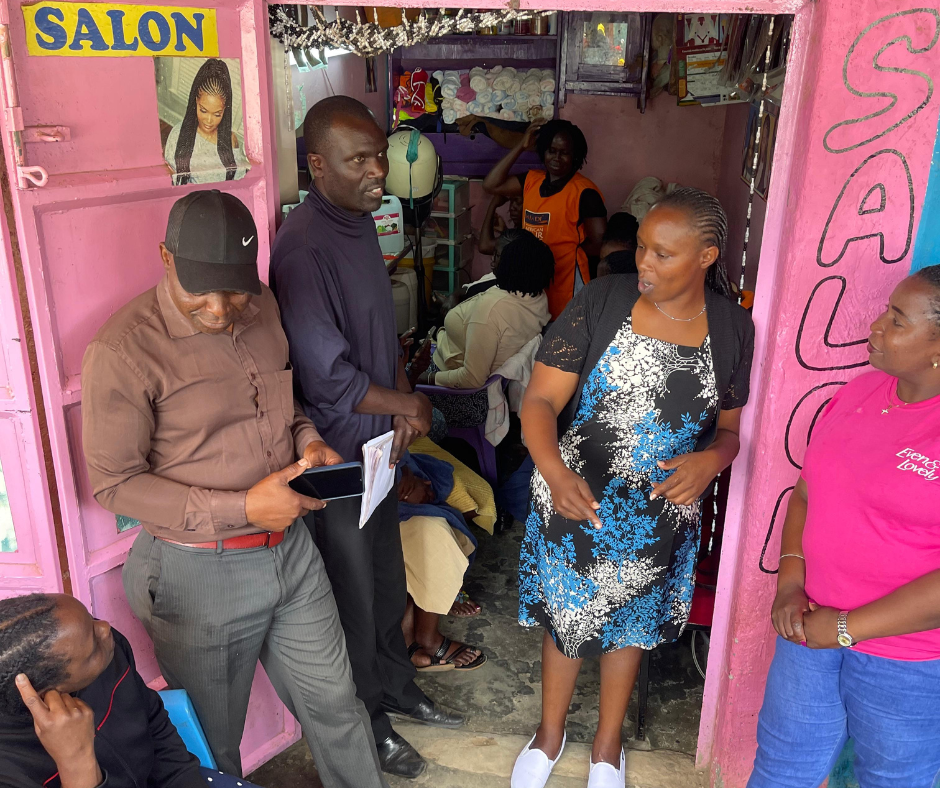
Salonist conducting civic education in Kawangware
And that choice changed everything for us.
We learned that formal civic spaces are not neutral. Some come with invisible barriers: time, transport, childcare, intimidation, and unspoken power dynamics that often silence women and those most affected by poor governance.
In everyday spaces, the conversations feel different.
Chama women in Kawangware now talk about how to prevent and respond to gender-based violence during their regular meetings, because it is already part of their lived reality. Grassroots women in Mathare are opening up about rights and injustice in salons, in ways we rarely see in formal forums.
Barbers in Kayole are turning routine haircuts into real talk about local leadership and service delivery.
This is not just information sharing. It is a transformation. People speak more freely when the conversation is led by someone they trust, someone who cuts their hair, saves with them, or lives in their community. Learning sticks because it becomes part of daily life, not a one-off event.
And in a moment like this, when civic spaces are shrinking and activism is under pressure, these everyday spaces have become even more important, offering safety and a form of organizing that is easier to sustain.
So this year, we are scaling what is working.
Not in more workshops.
Not more conference halls.
We are investing in multipliers—Chama leaders, Salon owners, Barbers, Digital Influencers, and Community connectors in strengthening our civic space.
The real question is not whether unconventional spaces work. It is whether we are ready to leave our comfort zones for where democracy actually happens—in living rooms, along riverbanks, and in the chair where someone is braiding your hair.